ONG means “on God.” It is a short way of saying “I swear” or “I’m being completely honest.” When a friend sends ONG on Snapchat, they want you to know they are not exaggerating.
The phrase borrows from the older expression “I swear on God,” used for generations to add weight to a statement. Snapchat users shortened it to three letters so it fits naturally into fast, casual chats. Snapchat users often use ONG to confirm something happened or to respond when a friend doubts them.
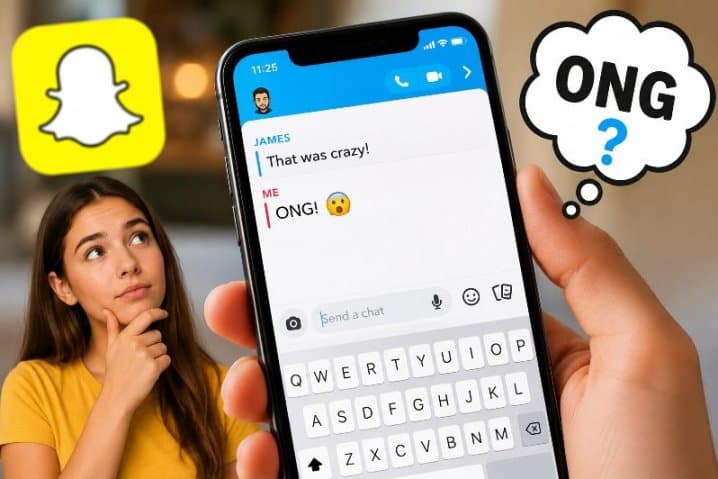
You will usually see ONG on its own, at the start of a sentence, or right before an exclamation point. All three placements carry the same meaning: this is real, trust me.
How People Use ONG on Snapchat
ONG shows up in three main places on Snapchat: direct messages, story captions, and group chat replies. Each use case carries the same core meaning of sincerity, but the tone shifts slightly depending on where it appears.
In a direct message, ONG usually backs up a claim the sender just made. A friend might text “that concert was insane, ong” to stress that the show really was that good.
In story captions, ONG adds emotional punch to a photo or video. Someone might post a funny clip with the caption “ong I can’t stop laughing” to show genuine reaction rather than a scripted joke.
In group chats, ONG often responds to disbelief. If one friend says something surprising, another might reply “ong, I was there” to confirm the story is true.
Read Also: How IYKYK is Used on Social Media
ONG vs Other Snapchat Slang Terms
ONG belongs to a small family of slang terms that all express honesty or emphasis, but each one carries a slightly different flavor. The table below breaks down the differences.
| Term | Full Meaning | Typical Use | Tone |
|---|---|---|---|
| ONG | On God | Confirming something is true | Sincere, emphatic |
| FR | For Real | Agreeing with a statement | Casual agreement |
| NGL | Not Gonna Lie | Admitting something honestly | Candid, sometimes self deprecating |
| No Cap | No Lie | Stressing that a statement is genuine | Bold, confident |
| OMG | Oh My God | Reacting with surprise | Shocked, excited |
FR and No Cap serve a similar purpose to ONG, but ONG tends to carry a slightly heavier emotional weight because it references swearing on God specifically.
Where Did ONG Come From?
ONG traces back to African American Vernacular English, where “on God” has long been used as an oath to stress honesty.
The phrase moved from spoken conversation into text and social media as younger users looked for quick ways to add sincerity to short messages.
Social media influencers and Gen Z users helped push ONG into mainstream slang across TikTok, Snapchat, and Instagram.
Once the term appeared in popular TikTok comments and captions, it spread quickly to Snapchat chats and stories, where fast, casual language already dominates.
By 2026, ONG ranks as one of the most searched text abbreviations online, alongside similar terms like FR, NGL, and TBH.
Frequently Asked Questions
Is ONG the same as OMG?
No. ONG means “on God” and expresses honesty, while OMG means “oh my God” and expresses surprise.
Is ONG rude to use?
No. ONG is a casual slang term for honesty or agreement. It is not offensive, though it should be avoided in formal settings.
Can ONG be used flirtatiously?
Yes. Some people use ONG to add sincerity to a compliment or flirty message, such as “you’re the sweetest ong.”
Should I use ONG in a work message?
No. ONG is informal slang and does not fit professional or formal conversations.
How do I respond to someone who sends ONG?
You can simply agree, ask a follow up question, or reply with your own honesty term like FR to match the tone.
Why do people use ONG instead of just saying “I swear”?
ONG is shorter and faster to type, which fits the quick pace of Snapchat conversations while still carrying the same sincere meaning.
Conclusion
ONG is a simple slang term with one clear job: to make a statement feel more honest and sincere.
On Snapchat, it appears in direct messages, story captions, and group chats whenever someone wants to stress that they mean exactly what they said.
Once you know it stands for “on God” and understand how it differs from OMG, you will never mix up the two again.